Knowing your rankings only gets you so far on fantasy football draft day. Knowing exactly where you’re no longer comfortable at a position, your personal tier break, is what actually protects a roster. Our analysts walked through the running back position looking for those breaking points at RB1, RB2, and the RB3-to-bench range.
- 2026 Fantasy Football Expert Rankings
- Fantasy Football Dynasty Rankings
- Fantasy Football Trade Analyzer
- Best Fantasy Football Rankings

Running Back Tier Breaks: Fantasy Football Draft Strategy
Where’s the Line for Your RB1?
One analyst set his RB1 cutoff at Josh Jacobs (RB – GB), currently going around RB15. He plays in leagues requiring three starting wide receivers, which pushes him to attack that position aggressively early, sometimes even leaning into a zero-running-back build. That approach means he’s comfortable going deeper at running back than most, and Jacobs is where that comfort ends. Jacobs has been fading in some rankings due to an ongoing off-field legal situation, but no charges have been filed as of now, and nothing imminent appears on the horizon. Since joining Green Bay, Jacobs has averaged close to a touchdown per game in the regular season, making him a steady low-end RB1 in this analyst’s eyes, and the last name inside his personal RB1 tier.
The other analyst drew her line one tier earlier, at Derrick Henry (RB – BAL). She’s actually ranking Henry above his current consensus ranking, drafting him as though his own off-field situation resolves without complication, similar to how the other analyst is treating Jacobs. Her real distinction is trust: every back above Henry, in her view, comes with an established, provable level of trust in their role and offense. Below that line, starting with Kenneth Walker, she’s essentially betting on a career year that hasn’t materialized yet despite multiple opportunities, even with an improved situation this year. As a data point, she notes that a talented but limited-snap rookie last year still out-produced Walker in fantasy points per game in nearly every one of Walker’s career seasons, reinforcing her hesitation to trust a proven veteran back who still hasn’t made that leap.
Where’s the Line for Your RB2?
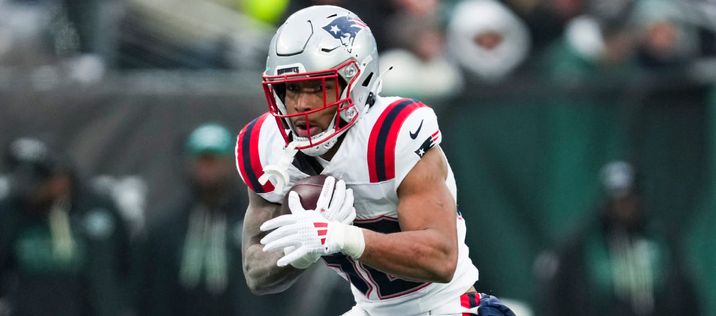
One analyst set her RB2 cutoff at TreVeyon Henderson (RB – NE). She’s genuinely hesitant to dip into David Montgomery territory, worried about a pass-catching teammate eating into his passing-down role, a run-game context that doesn’t push an aggressive pace, and a retooling offensive line that hasn’t proven itself yet. She hasn’t seen Montgomery handle a true three-down workload since his Chicago years, and while she believes he could do it again, she wants more information before trusting it as her RB2 floor. She’s more comfortable with DeAndre Swift, even with his own timeshare, because his role feels more clearly defined even if his ceiling is capped.
The other analyst set his cutoff at Tony Pollard (RB – TEN), currently around RB28. Below Pollard, he sees a run of backs he doesn’t fully trust to lead their own backfields: one committee back who may not even be the top running back on his own roster once a rookie takes over, another he expects to get passed on the depth chart, and a third he views as a committee piece rather than a true starter. He does add a caveat: in leagues that only require two starting wide receivers, he’d want a better running back than Pollard as his RB2, potentially pushing all the way up to Montgomery.
Where’s the Line Where You Actually Messed Up?
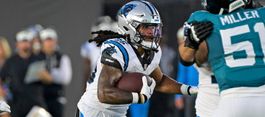
For the RB3-and-bench range, both analysts landed on the exact same player: Chris Rodriguez (RB – JAC), currently around RB43. The reasoning is nearly identical for both. Rodriguez doesn’t catch passes, and in a crowded three-man backfield, that alone removes any path to usable weekly value even if he sees early-down work. Just above him, Tyrone Tracy represents the last name either analyst feels comfortable with, even acknowledging that Tracy is on shaky ground himself if a healthy teammate takes over a true workhorse role. The distinction is that even in a reduced role, Tracy’s standalone receiving value gives him a real floor if that teammate gets hurt, something Rodriguez simply doesn’t have regardless of what happens to the backs ahead of him. Every running back above that Rodriguez cutoff has some kind of credible argument for weekly value, whether it’s goal-line work, receiving work, or league-winning volume potential. Below it, the pitch stops being about production and becomes purely about handcuff value.
View the Best Fantasy Football Team Names 
Fantasy Football Draft Rankings
Check out the consensus 2026 fantasy football draft rankings from our experts.

Subscribe: Apple Podcasts | Spotify | SoundCloud | iHeartRadio