These aren’t just good fantasy football draft values. They’re players our analysts believe carry a genuine top-five-at-their-position ceiling relative to where they’re actually being drafted, the kind of picks that can single-handedly swing a fantasy season. Here’s the full countdown, ranked from 10 to the top pick.
- 2026 Fantasy Football Expert Rankings
- Fantasy Football Dynasty Rankings
- Fantasy Football Trade Analyzer
- Best Fantasy Football Rankings

10 Fantasy Football League Winners to Draft
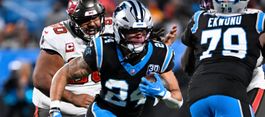
10. Jonathon Brooks (RB – CAR)
There’s a well-lit path for Brooks to become Carolina’s lead back. The presumed starter is probably the favorite to open the season with the job, but that’s far from a lock. He had a nice 2024, but has otherwise been a replacement-level performer for most of his career, and last year the team benched him early in the season in favor of a running back on a one-year deal. He posted double-digit carries in just one of his final nine regular season games.
Brooks is a real medical risk after tearing the same ACL twice within about 13 months, but it’s now been roughly 20 months since the second tear, and the team has expressed real confidence that the second reconstruction went far better than the first. He was only a one-year starter in college, playing behind a future first-round pick as an underclassman, but that lone season was dazzling: 1,400 yards from scrimmage and 11 touchdowns in 11 games, production that earned him a stylistic comparison to Jamal Charles from a national draft analyst. If Brooks takes over, he’d anchor an offense that leaned heavily on the ground game last year, throwing 25 or fewer passes in half of its starts and posting the fifth-lowest pass rate over expected in the league. He’s still going in the middle rounds despite the team publicly signaling real intent to work him into the offense early.
9. Tyler Warren (TE – IND)
The concern here isn’t Warren himself, it’s his quarterback’s health. Over the first 11 games of Warren’s rookie season, he averaged five catches and 60 receiving yards per game, finishing as the TE3 in fantasy scoring over that stretch. Then his quarterback fractured his fibula in late November and tore his Achilles two games later, and Warren’s production dipped, though he still finished with 76 catches, 817 yards, and five touchdowns, good for TE5 overall, and led the team in targets with 112.
The receiver who finished right behind him in targets is no longer on the roster, and the team made no significant additions at wide receiver this offseason, giving Warren an excellent chance to lead the team in targets again. He adds a little rushing value too, with eight carries and a touchdown last year, following a final college season that included 104 catches, 1,233 yards, and 12 total touchdowns. Even accounting for real risk if the quarterback situation takes another hit, this offense looked wildly effective before the injuries last year, and Warren is positioned for an even bigger role in year two given how much the target competition around him has thinned out.
8. Christian Watson (WR – GB)
Watson is currently going as the WR28, 66th overall, a range our analysts believe undersells his ceiling. Injury-history concerns tend to push players like this later than they should go, especially in home leagues. When healthy last year, coming back from an ACL tear suffered at the end of the 2024 season, Watson played 10 games and averaged elite per-target and per-route numbers, basically producing at a 1,000-yard, 10-touchdown pace. The team has since thinned its receiver room down to a clear core group, with Watson as one of the top options.
At 6-foot-4, 208 pounds, with legitimate 4.36 speed, Watson has the physical profile of a true difference maker when he’s on the field, and he’s paired with a high-quality quarterback. The offense’s overall pass rate has trended up over the last two seasons, and there’s a real path to even more passing volume this year given the team’s defensive question marks and depth concerns elsewhere on offense. Watson currently sits in the same ADP range as several running backs our analysts would rather pass on entirely in favor of taking him.
7. Jameson Williams (WR – DET)
Williams is going as the WR25 overall despite averaging just six targets per game last year and still finishing with 1,117 receiving yards. The question is simple: what could he do with seven or seven and a half targets a game? His team’s passing game is genuinely spread thin beyond one clear top receiver, and a tight end dealing with his own injury history, leaving real room for Williams to grow into a bigger role.
The more important story is a usage shift that happened midseason. The head coach took over play-calling duties partway through last year, and the change was significant for Williams specifically. Under the previous play-caller, he averaged just 2.6 catches and 44.4 receiving yards per game, mostly running deep decoy routes without getting the ball much. After the change, he averaged 4.9 catches and 84.7 receiving yards per game, with far more crossing routes and easy catches that let him use his elite speed after the catch. From that point on, he finished as the WR9 in half-PPR scoring, trailing his star teammate by less than a point per game over that stretch, a teammate almost everyone considers a clear first-round pick. With a new offensive coordinator now calling plays, the belief is that this improved usage sticks rather than reverting, making Williams a real value at his current price.
6. TreVeyon Henderson (RB – NE)
Henderson has real immediate backfield competition, but he’s already flashed the kind of upside that makes a player a true league-winner. When the presumptive starter missed three games last season, Henderson posted 330 scrimmage yards and five touchdowns over that stretch, finishing behind only two running backs in fantasy scoring during that window. He also had multiple other multi-touchdown games even with that starter active.
The concern is the ugly finish: Henderson played sparingly and ineffectively in the playoffs, with the coaching staff seemingly trusting the other back’s pass protection more against tough postseason defenses. Henderson has admitted he was a bit overwhelmed by the size and speed of NFL pass rushers as a rookie, something expected to improve in year two. It’s also worth noting the other back wasn’t especially effective in the playoffs either, and Henderson is a far more explosive player by any measure, posting more 40-plus-yard runs in his rookie season alone than his teammate has had across several NFL seasons combined. Even in a continued 50-50 split, Henderson should return something close to his current mid-round cost, and if the depth chart shifts more decisively in his favor, he could be one of the biggest values at the position this year.
5. Emeka Egbuka (WR – TB)
Egbuka had a genuine tale of two seasons as a rookie. Over his first five games, he was the WR3 overall in fantasy scoring with five touchdowns, averaging over 20 PPR points per game and catching nearly two-thirds of his targets, all while sharing the field with at least one veteran teammate at all times. Then he tweaked his hamstring in week six and played through it, and his production crashed to under eight PPR points per game the rest of the way. His quarterback also took a downturn around the same time, and the offensive line dealt with major injuries for a big chunk of the season.
That offensive line is now healthy and viewed as one of the better units in the league. One of the veteran receivers who shared the field with Egbuka last year is no longer on the roster, and the other, while still around, wasn’t as effective last year as he’s been historically, raising real questions about whether he’s fully back from a serious injury a couple of years ago. All signs point toward Egbuka becoming this offense’s clear leading receiver, and our analysts got a real glimpse of what that ceiling looks like in the first five weeks of last season.
4. Colston Loveland (TE – CHI)
Loveland’s role grew steadily throughout his rookie season before exploding down the stretch. He didn’t top two-thirds of offensive snaps until around week eight, and still finished as the TE12 overall for the season. From week nine on, though, he was the TE2 in the league, trailing only one player. Over his final four games, including a playoff win, he had double-digit targets in every single one, averaging 12 targets, seven catches, and 94.5 receiving yards per game, capped by a 15-target, 137-yard playoff performance.
At 6-foot-6 and 241 pounds, he’s simply too big for most safeties and too fast for most linebackers to handle. With a new offensive-minded head coach expected to feature him heavily, he has a real chance to lead his team in targets, and even if he doesn’t, he should be in the same range as the team’s top receivers. His early third-round to early fourth-round price is easy to justify given how dominant he looked once his role fully opened up.
3. Zay Flowers (WR – BAL)
Flowers’ raw numbers improved only modestly from 2024 to 2025, but the context tells a much better story. In 2024, he accounted for just over a quarter of his team’s total offensive yardage. Last year, with his quarterback missing time and playing through injury for stretches, that share jumped to nearly 37% of the team’s offensive yardage, a massive increase in offensive responsibility. The team added two rookie receivers this offseason, but neither is expected to pose real target competition given Flowers’ 29% target share last year.
The most exciting piece of this profile is untapped red-zone upside. Flowers has been used sparingly near the goal line across his three NFL seasons and has never caught more than five touchdowns in a single year. A new offensive coordinator could meaningfully increase his usage in scoring position, setting up a real chance at a new career high in touchdowns. With one tight end now gone from the roster and another whose efficiency collapsed last year, there’s very little competition left for volume in this offense outside of Flowers himself.
2. Kenneth Walker III (RB – KC)
One analyst ranks Walker at the very top of his running back tier, ahead of several more heavily hyped names. The case starts with what he showed in a featured role late last season, when he became an absolute workhorse in the playoffs, averaging 30 touches and 161 scrimmage yards per game across a three-game championship run, including dominating a genuinely excellent run defense in the biggest game of the year.
He now joins a team that’s been searching for real explosiveness in the run game after getting mostly plodding production from its previous backs, and a starting quarterback coming off a major knee injury only adds incentive to lean on the ground game. Walker averaged 16.4 touches per game across his four seasons in his old situation; in his new one, with a notable financial investment made in him and little proven competition on the roster, a workload closer to 20 or more touches per game looks realistic. He’s also shown throughout his career that he’s comfortable and effective on checkdowns, undercutting the idea that he can’t handle passing-down work. With a potentially healthier passing attack reducing his quarterback’s need to scramble as much as last year, the door is open for a monster workload. Our analysts view him as justifiable as early as the turn between the first and second rounds.
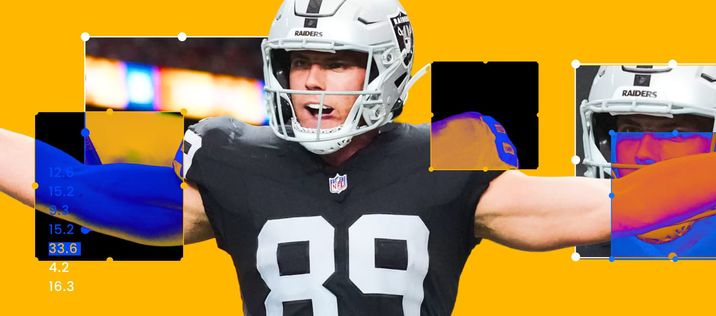
1. Brock Bowers (TE – LV)
Bowers is currently going 20th overall as the consensus TE1, and our analysts believe he has a real chance to be one of the defining fantasy players of the entire season. As a rookie, he was already regarded as one of the best tight end prospects ever, and he backed that up with 112 catches, 1,194 yards, and five touchdowns, finishing as the overall TE1 and producing like a true wide receiver one from the tight end position, all with a genuinely poor rotation of quarterbacks throwing him the ball.
This year’s quarterback situation still isn’t ideal in the short term, but the current bridge starter has a surprisingly strong history of being tight-end friendly throughout his career, including big individual tight end performances and full breakout seasons at previous stops. Eventually, the team’s rookie quarterback is expected to take over, a player viewed as a clear upgrade. The receiving corps around Bowers remains genuinely unsettled, making him the unquestioned top pass catcher on the roster by a wide margin. His 2025 season was derailed early by a knee injury that never fully allowed him to get going, but this year brings a new coaching staff expected to fix a dysfunctional offense and real investment in the offensive line. Bowers and the team’s rookie running back are expected to account for a massive share of the offense’s total production, and it’s hard to find a player with more upside anywhere in fantasy football this year.
View the Best Fantasy Football Team Names 
Fantasy Football Draft Rankings
Check out the consensus 2026 fantasy football draft rankings from our experts.

Subscribe: Apple Podcasts | Spotify | SoundCloud | iHeartRadio